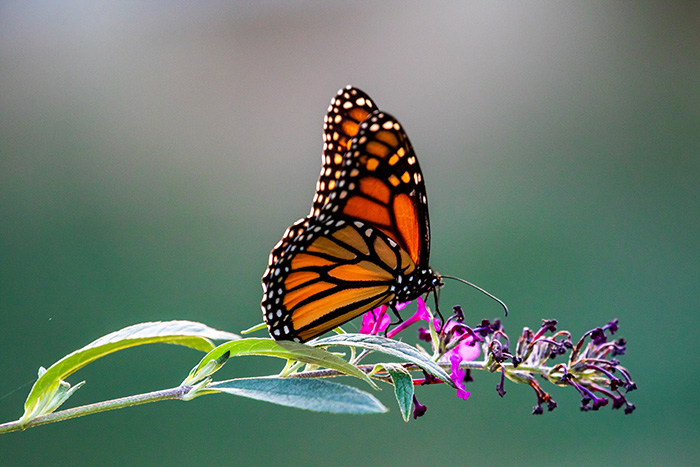
If you have been in a garden lately, you may have noticed black and orange butterflies flying around. At this time of year, three species of black and orange butterflies frequent North Texas: Monarchs, Queens and Gulf Fritillaries. While they look similar at first glance, the Dallas County Master Gardeners has some tips on how to tell them apart.
Monarch
The Monarch is the official state insect of Texas. Every fall, Monarchs pass through our region on their long migration to central Mexico, where they overwinter in mountain forests until spring. Monarchs have:
- Bold, thick black veins across the wings
- Bright orange coloration with strong contrast
- White spots along the wing edges
- Larger and more elongated than the Queen
- Caterpillars are striped in yellow, white and black and feed exclusively on milkweed species. Native milkweeds such as antelope horn and green milkweed are especially important for supporting their life cycle.
Queen
The Queen looks like a darker, richer version of the Monarch. The wing pattern is the best way to distinguish the two. The Queen has:
- Fewer, thinner black veins than a Monarch
- Wings often appear deeper orange or chestnut
- A different pattern of white spots, especially near the forewings
- Slightly smaller and more compact in shape
- Caterpillars look similar to a Monarch caterpillar and also feed on milkweed.
Gulf Fritillary
Gulf Fritillaries are common in Texas gardens from spring through fall. Their flight is quick and darting, and their color is a vivid orange. The underside of the wings provides the easiest identification clue. Gulf fritillaries have:
- Distinctive silver spots on the underside of the wings
- Narrower wings with a more elongated shape
- Upper side is bright orange with black streaks rather than veins
- Caterpillars are bright orange with black spines and feed on passionvine, not milkweed.
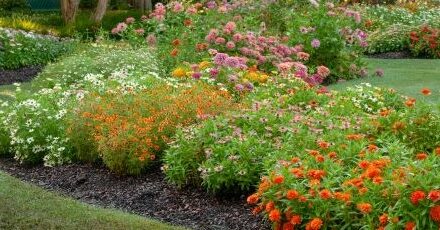
Richardson is a great place to spot monarchs and other butterflies, as the City has been a Mayors’ Monarch Pledge city since 2015 (a program of the National Wildlife Federation), recognizing that the butterfly is an important part of our ecosystem. The Parks and Recreation Department has established dedicated butterfly gardens in four parks—Berkner, Prairie Creek, Durham and Yale—and includes butterfly-friendly “pollinator plants” (that attract and feed butterflies) in park and landscape projects wherever feasible, such as at Collins Park and CityLine Park.
Scientists rely on the help of “citizen scientists” to understand the monarch’s conservation needs.
Visit the Dallas County Master Gardeners butterfly page
Report sightings and follow the monarch migration
Learn more about monarchs in Richardson